Questions & Answers
- You can use any anionic bitumen emulsion. The electrical charge in cationic bitumen emulsions are inclined to delay the polymerization process prolonging the curing time.
- Using anionic emulsion, the initial time for the chemical reaction to take place is a few hours whilst using cationic emulsions it might take a few days.
- Due to the delay in curing when using cationic emulsions it can be expected that the final strength of the treated soil would be about 70% of that when anionic emulsion is used.
- We prefer to use the bitumen emulsion from our supplier due to the surfactants used in manufacturing the emulsion are less harmful to the environment than others.
- As bitumen is actually a reclaimed product extracted from petrochemical waste there is always the risk that there are differences between batches supplied by unknown sources.
- Soil conditions vary within a short distance and it is unwise to use unknown materials in an application where the cost of the bitumen has a small influence on the final cost of the installation.
- Yes please do share the information as the MSDS is intended to allow people not familiar with the product to know how to react in the event of an emergency.
- In the industry of chemical soil stabilizers there are quite a few unscrupulous suppliers with claims based on the performance of other materials. For this reason we prefer to limit the amount of information to others and require a confidentiality agreement of our Intellectual Property with our customers.
SANS 10198 gives testing that can be done, to determine this. Thermal resistivity of the soil-Terraloc mixture will has never resulted in the need to derate a cable in the last 3 years.
- The thermal resistivity of the treated soil is the same as the original material or could be slightly more conductive due to a more consistent compaction found when Terraloc is used.
- In laboratory tests no meaningful differences were found.
- Terraloc has the ability to act as a compaction aid. This means that the risk of hot spots along the cable is reduced where compaction using only water could cause small cavities along the line.
- It is safe to assume that the thermal conductivity will not be reduced and no derating is required.
In which case what is the insulation mm/kV it can give?
- No high voltage tests with treated soil have been done and it is expected not to alter the electrical properties of the treated soil.
- The only electrical properties of Terraloc were done to determine the resistivity of the cured chemicals without any soil added. The properties of oven baked samples compared to that of most plastics regarding dielectric strength or resistivity.
- It is important to remember that at dosages below 5% the properties of the substrate would dominate.
- Terraloc is not intended to be used on materials with a homogeneous surface.
- The purpose of Terraloc is to enhance the latent binding properties of materials such as soil, coal or other organic materials and should not be seen as an adhesive.
- It is especially effective where materials containing materials where isomorphic substitution of the compounds can be found.
- The product “Polyurea” is a surface spray provided by the company ABE and others.
- It is a polyurethane based material that is intended to form a film and not an additive into soil to form a volumetric inert substance.
- Terraloc is not intended to be used as film and act as bridge between particles. It is able to allow gas to pass through the substrate but is hydrophilic that forms a solid substance with extremely low permeability.
Product Information
TerraLoc is a Patented Synthetic Resin Hydrocarbon Ground Glue Binder and is constituted on site. The mixture is added to crushed stone, natural gravels or sand to form a water resistant, elastic and robust layer. It improves the compressive, tensile and shear strength of all gravel and also the abrasion and water resistance of the particulate materials for construction and cable protection. It is insoluble in water and therefore does not leach.
TerraLoc encases HV, MV and LV cables and selected accessories (including bedding and blanket soil layers) to prevent theft. Terraloc does not affect thermal resistivity of surrounding soil or heat dissipation from cable. There is a simple means to remove encasement for instance where the client needs to perform maintenance. It is important to note that TerraLoc is most effective if the whole length of cable is encased and not just portions.
The important point to remember that in any technology, it is relatively easy to provide a product to achieve some kind of result but experience provides insight in what not to do. Cement based products have unique properties and should only be used in those applications where it is well suited such as providing high compressive strengths. It does not adsorb heat well and is difficult to remove in the event of cable repairs or fault tracing. There are some costly water based polymers that could add load bearing properties to soil but soften when wet. These products are not well suited for this application.
Terraloc has been used for many years and experience has adapted its formulation and patents to suit adequate load loading strengths in most kinds of soils especially tailored for this application. In the event that a cable needs to be replaced the treated soil remains pickable and most important is that the excavated soil can be treated again without any remedial requirements. The hardness of the treated soil does require mechanical assistance and time to remove a cable that is not normally available to parties to remove the copper for personal gain.
Terraloc is a unique product that has not been equaled in more than twenty years. It is the only product that could achieve an interim Agrément Certificate (2015/496) for the use of an additive in soils as stabilizer to harden most materials. It is the only product to provide a wet-strength as it is insoluble in water after curing. Due to its ability to harden most kinds of soils its performance remains consistent and is enhanced in sandy soils. It is important to note that the thermal properties of the substrate will remain consistent under most climatic conditions.
TerraLoc Underground Asset Protection meets with the following requirements:
- A Patented Synthetic Resin Hydrocarbon Ground Glue Binder.
- TerraLoc is used for the purposes of creating solid bonded soil and gravel.
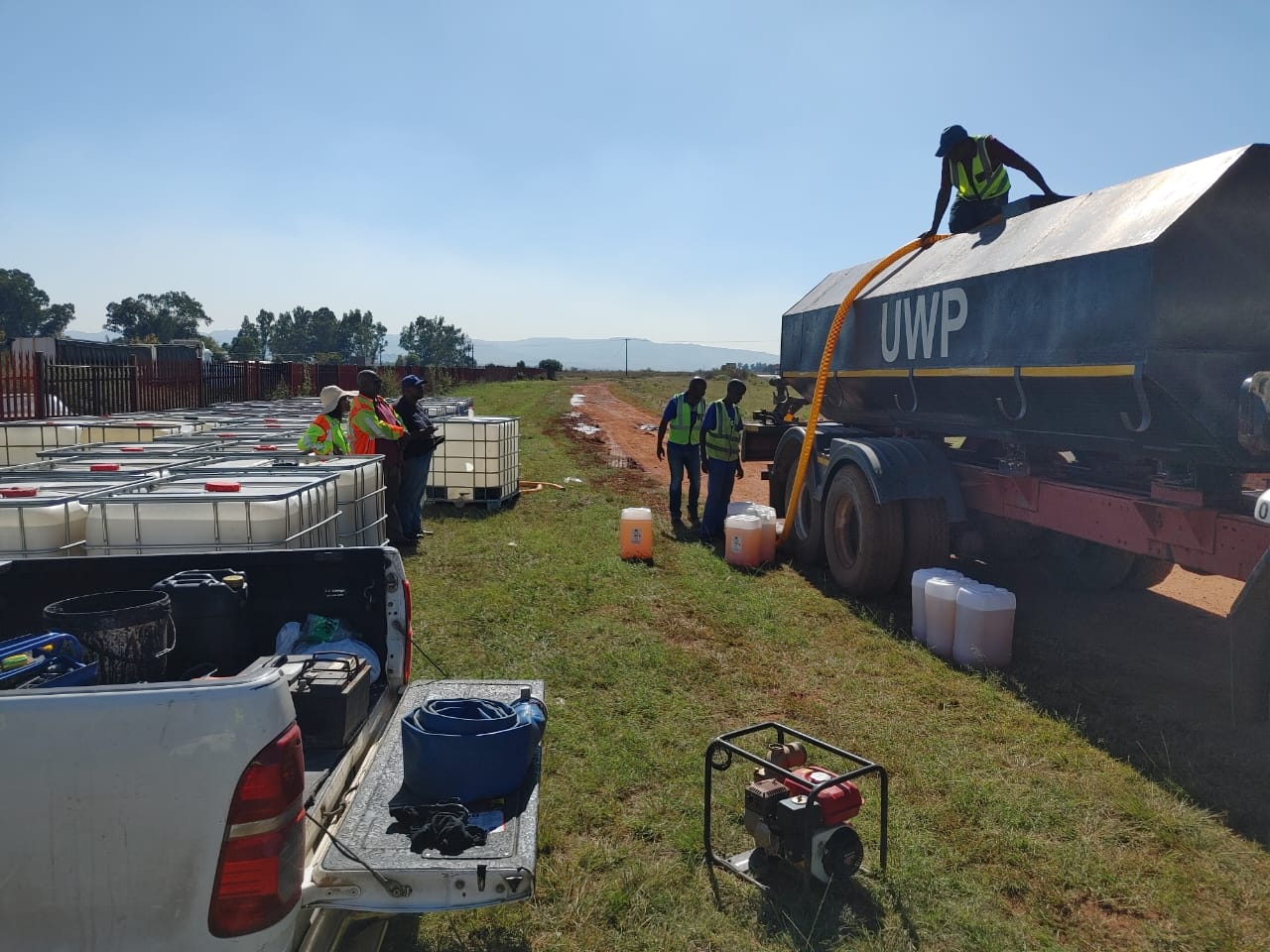
- TerraLoc is constituted on site through a chemical reaction by mixing bitumen emulsion, patented synthetic resin, water and a proprietary catalyst.
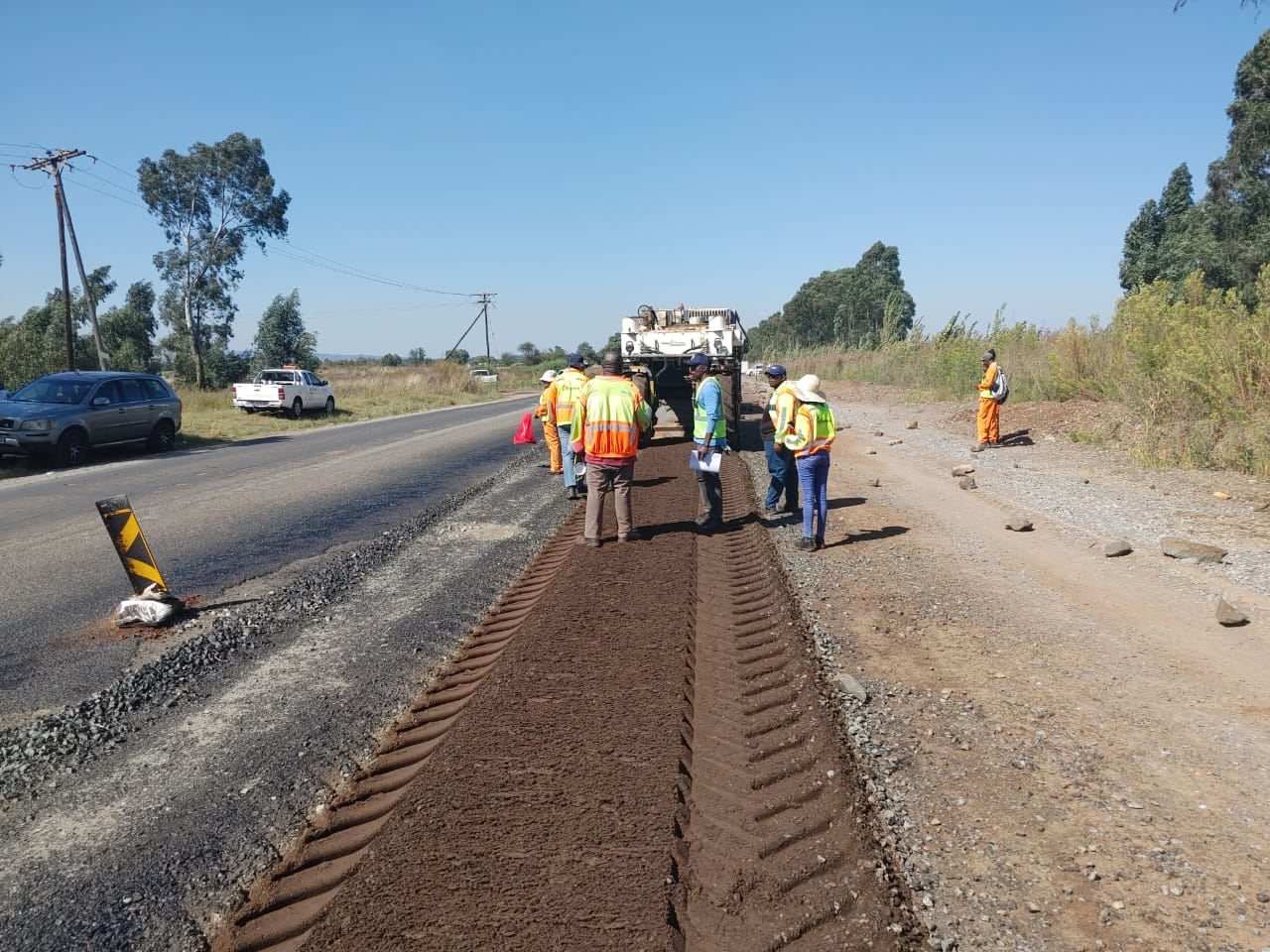
- The mixture is added to natural gravels or in-situ material to form a water resistant, elastic and robust layer.
- TerraLoc will improve the compressive, tensile and shear strength of the soil, including abrasion and water resistance.
- The product is insoluble in water and will not leach.
- The mixing ratios and application rate (mix design) depend on the site-specific material.
- The Synthetic Resin Hydrocarbon Ground Binder is manufactured under license in South Africa and internationally patented and carries an Agrement SA Certification.
- The Synthetic Resin Hydrocarbon Ground Binder is conductive to heat.
- TerraLoc will not harm the insulation around any cables.
- TerraLoc is environmentally friendly and has a 4 – 8 hour initial curing period with total curing after 24hours
- TerraLoc has a Thermal Resistivity rating that is safe and will not damage cables up to and including 132Kva.
References of TerraLoc on Eskom sites
We hereby confirm that we have installed TerraLoc on two Eskom sites which were regularly vandalized on had cable stolen on a weekly basis. The two sites in question are Carletonville Bulk Substation and Big Tree Cullinan. Since our installation there has been no more cable theft for almost two years although there have been many unsuccessful attempts.
Should you need confirmation you are welcome to contact Mr. Alluwani Phaswana on 011 871 3509 (Carletonville Bulk) or 072 290 5437 at Carletonville CNC and/or Miss. Zisanda Hlakudi on 012 421 3496 or 083 422 6068 (Cullinan CNC).
Should you require a site visit please contact me personally to arrange as these people are extremely busy on a daily basis as I’m sure you can appreciate. Furthermore, we can confirm that our product has been written into the Eskom Technical Specification for purposes of anti cable theft and cable protection.
Should you have any further queries please feel free to contact me directly.
Kind regards
Will Dundas
Director
Cell 071 456 5054









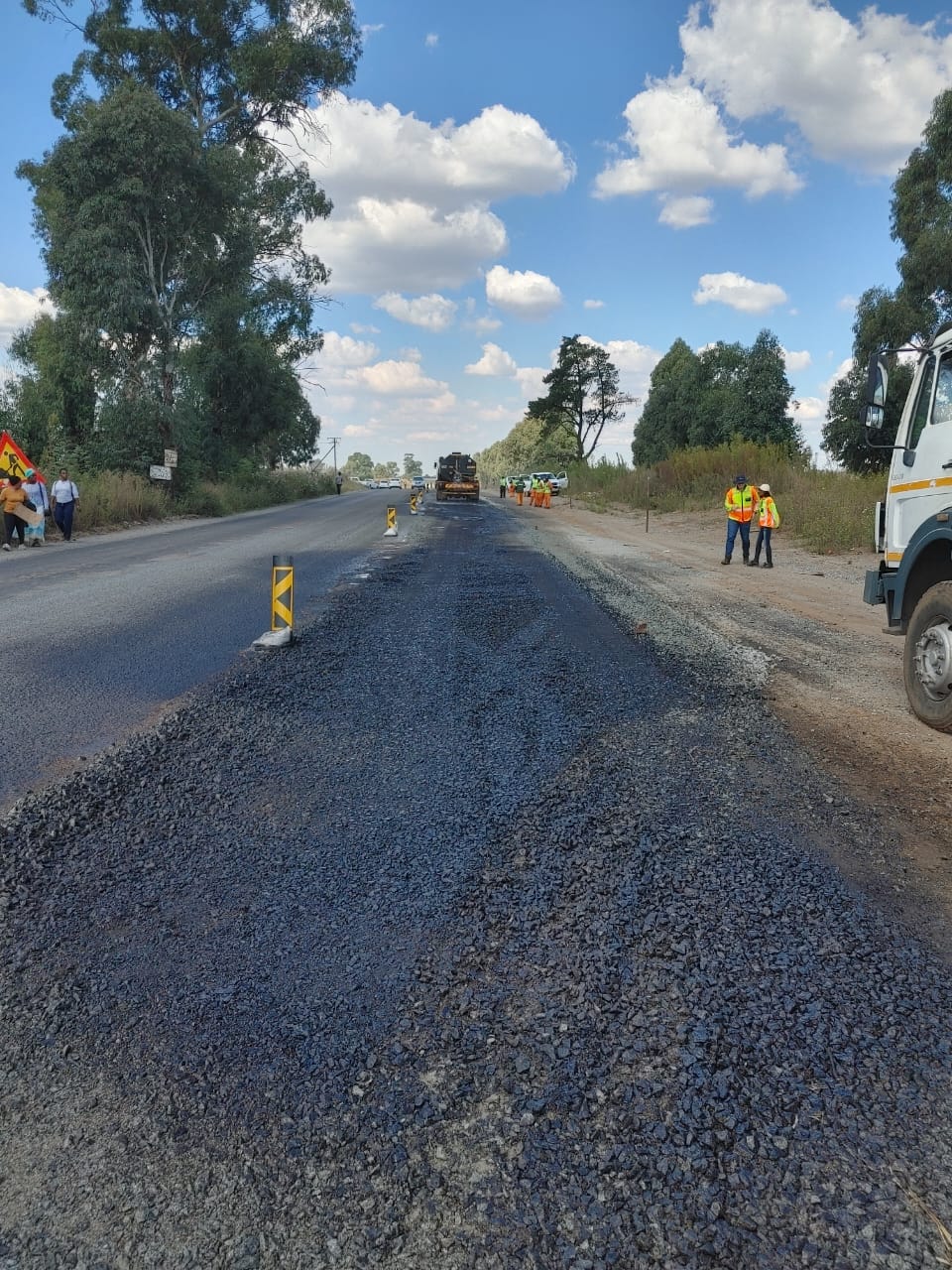
Our Images